Our story
Why we've built this
We've been primary caretakers for family members living with cancer, memory loss, and movement disabilities. We've sat in the waiting rooms. We know how important it is to be stewards of our own health. Exercise and living a healthy lifestyle is one of the most impactful and accessible ways to improve our quality of life and prevent disease. We've done the research, got the certifications, won the gold in powerlifting competitions and set national records, now we bring it all to you.
We search for the highest quality research using a public-health-oriented lens, and are constantly reviewing the latest evidence based practices. All to enhance our resilience in an unpredictable world. That is the Ruhl Method.
The  Application
We've developed this application in response to a direct gap in the marketplace. There are very few applications that address whole-person health and automatically progress your program based upon your starting point and unique journey throughout the domains.
- Auto-progression that adapts as you get stronger
- Foundation Score to track your readiness and recovery - and adjusts weekly program volume accordingly
- Progress tracking across every session and phase
- Customized to your current state and needs
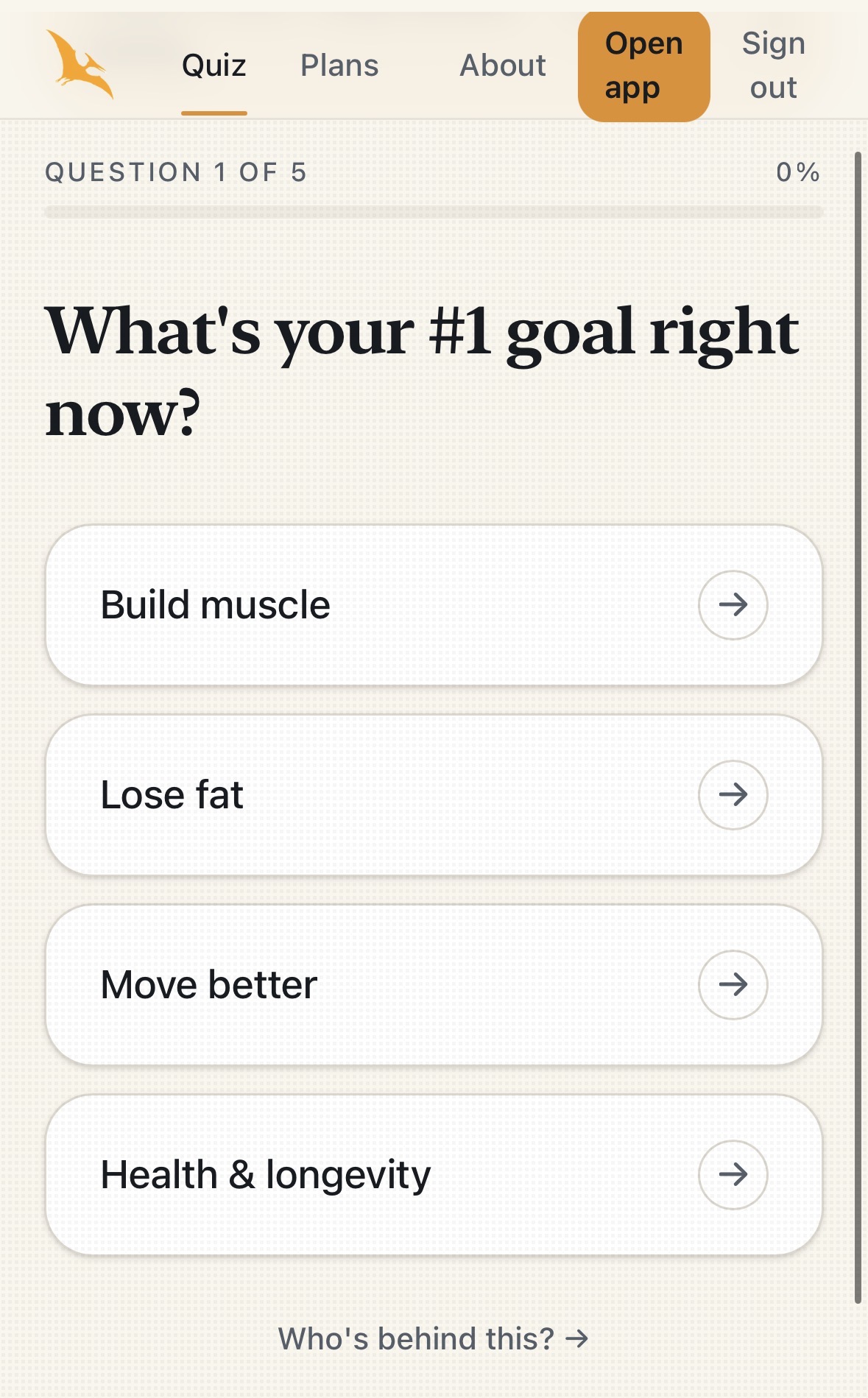
5-question quiz places you.
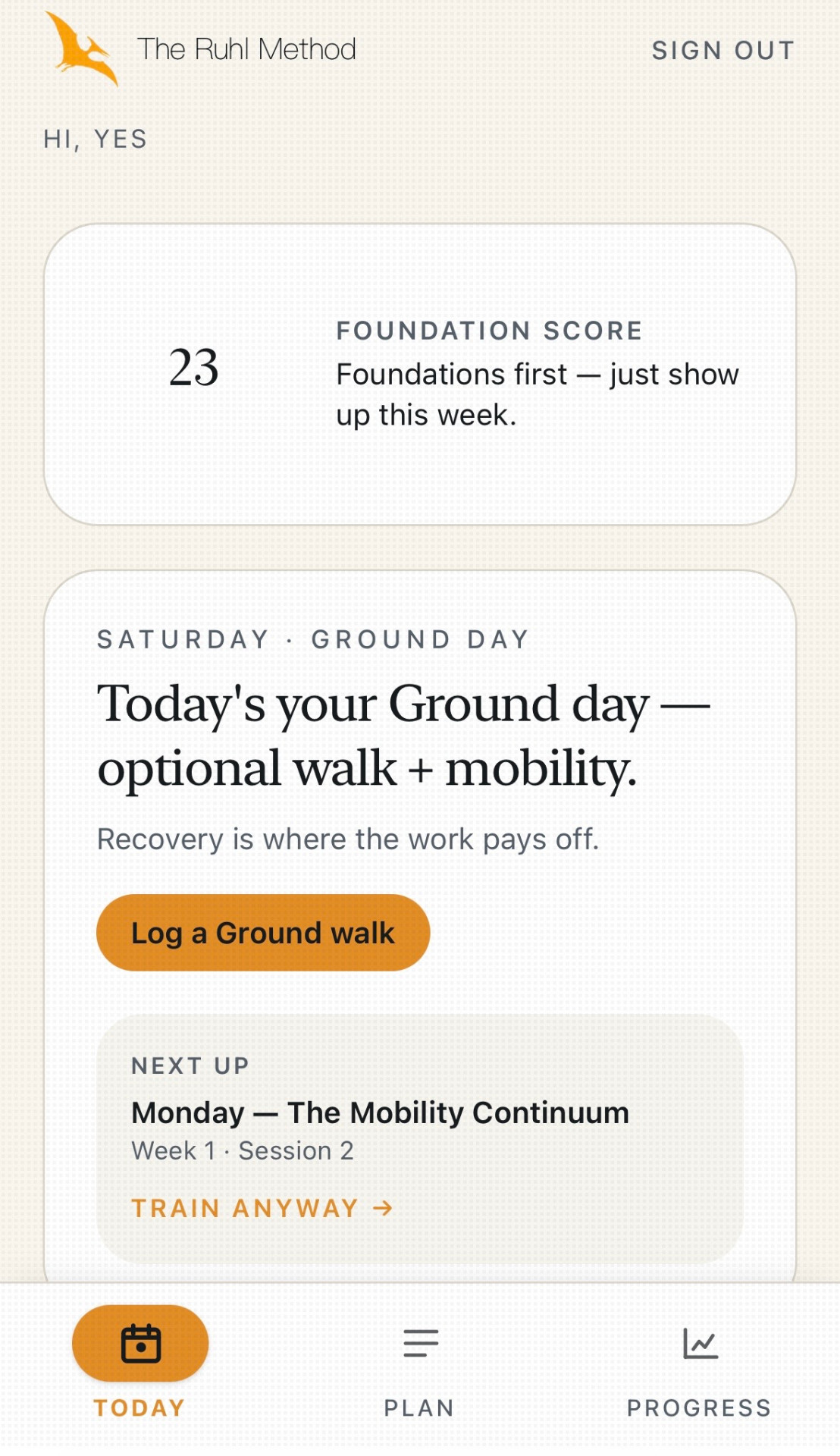
Today's session, ready.
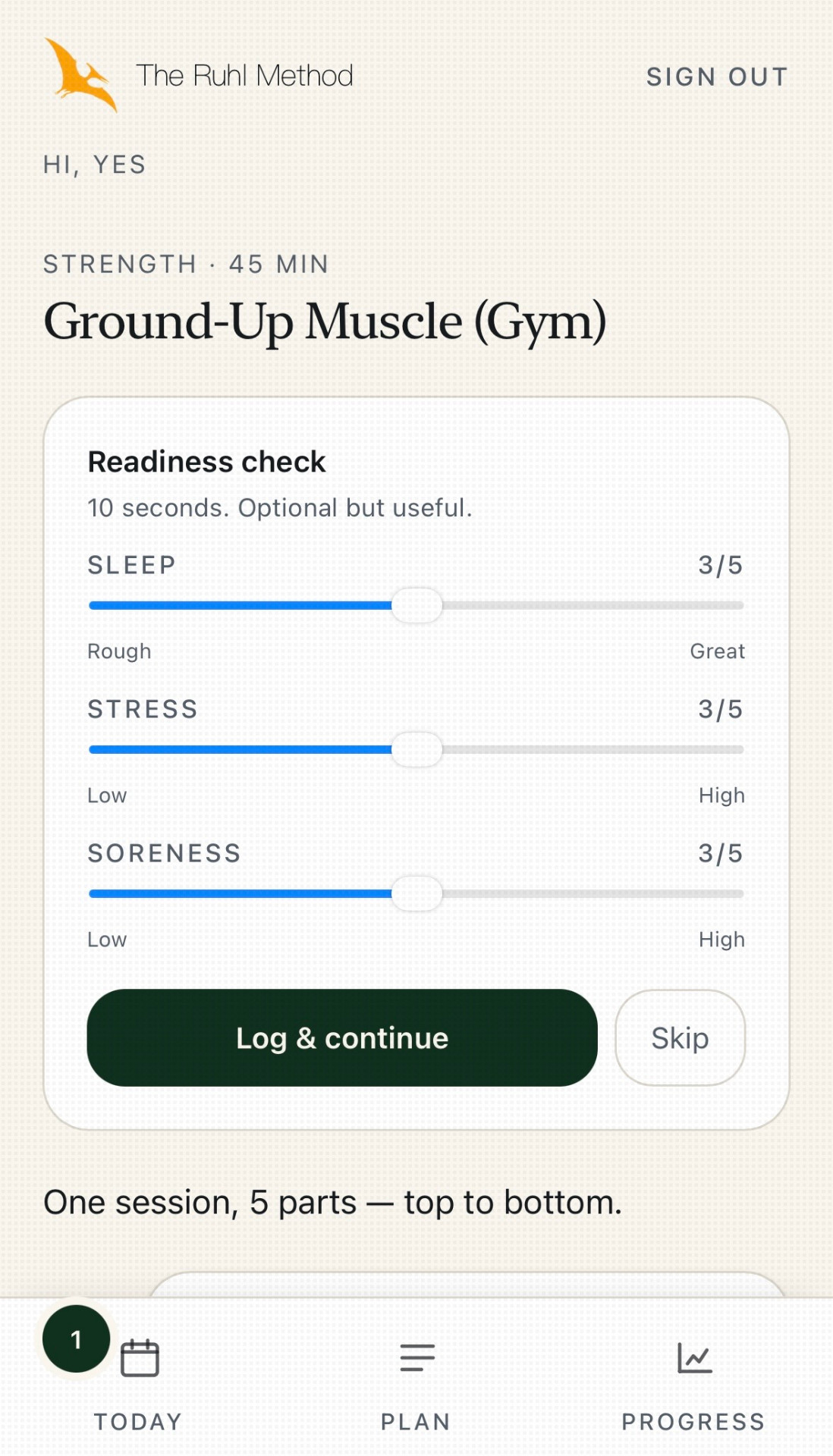
Readiness check adjusts load.
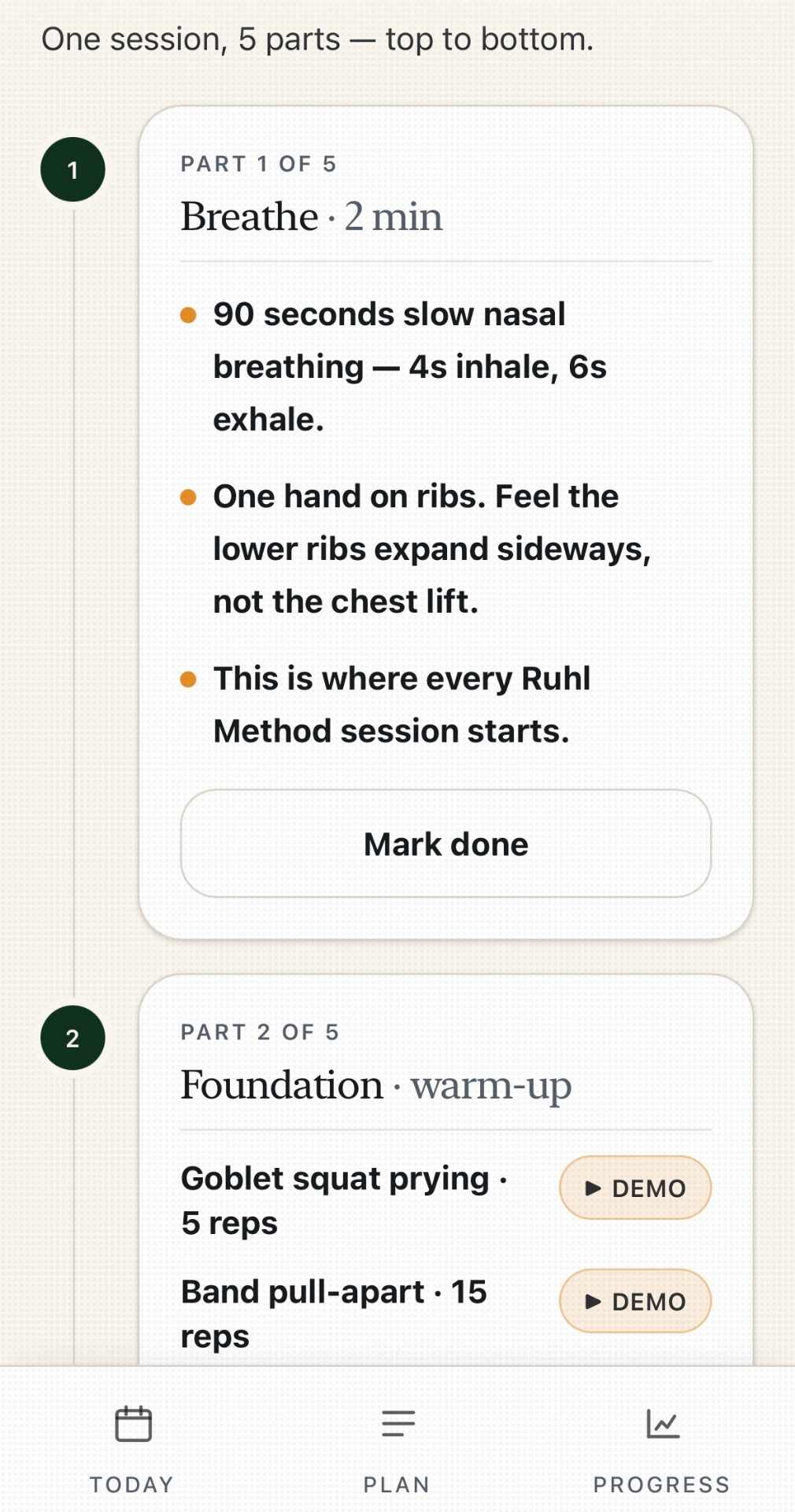
One session, five parts.
- 01
Breathe
We provide evidence based strategies to help bring the nervous system out of fight-or-flight. A few minutes of evidence-based breath work lowers your heart rate, sharpens focus, and tells your body it's safe to be creative. Real strength starts with regulation.
- 02
Foundation
Next, we build the movement patterns everything else depends on: how you brace, hinge, squat, and carry weight through your body and into the ground. These fundamental movement patterns shape how we move for decades.
- 03
Work
We leverage the latest exercise science strategies in combination with Ruhl Method flair - progressive, evidence-based strength and conditioning, dosed to where you actually are. The app tracks your reps, sets, and effort automatically and advances your program when you are ready.
- 04
Bulletproof
Every session provides direct or indirect work on your core and lower back — two areas that are incredibly important for longevity.
- 05
Ground
Lastly, a cool-down stretch and a walk outside when possible. No screens, no counting reps — just movement, fresh air, and a few minutes to let your nervous system settle. It closes the loop we've opened in Breathe.
The app runs this sequence for you automatically — prescribing each session, tracking your progress, and adjusting your training as your readiness changes day to day, so all you have to do is show up and follow it. That's the whole design philosophy: simple, evidence-based, and repeatable for decades.
Ancient Wisdom
Research tells us what works. We also spend time with healthy, resilient people and study what they actually do - research and human wisdom together are more useful than either one in isolation.
The evidence says simple works
A 2026 study from the Harvard T.H. Chan School of Public Health, published in the British Journal of Sports Medicine, followed nearly 150,000 adults over three decades. What it found is staggering:
- Just 90–120 minutes of strength training per week — pushups, squats, lunges, weights — was linked to a 13% lower risk of early death from any cause, a 19% lower risk from heart disease, and a 27% lower risk from neurological diseases like Alzheimer's.
- Doing more than 120 minutes a week did not provide a statistically significant difference in outcomes.
- Combining strength with aerobic movement — walking, swimming, cycling — drove mortality risk down by 45%.
"For people who are less active, the key message is that small amounts can still matter. Building a routine gradually may be more important than trying to do a lot at once."
That's The Ruhl Method: two to three simple sessions a week, strength plus movement, built gradually. Not because it's easy — because that's what the evidence says works.
It's bigger than you
Your genes aren't fixed instructions — they're more like a dimmer switch. Diet, movement, stress, and sleep all influence which genes get expressed, through a process called epigenetics.1,2 The habits you build in this program aren't just changing how you feel today.
They may echo further than that. Emerging research on transgenerational epigenetic inheritance suggests some of the biological effects of how we live can be passed down to our children.3 We are learning that a structured exercise routine and improving our lifestyle habits now can provide incredible benefits not only for ourselves, but for generations to come.
“The righteous who walks in his integrity— blessed are his children after him!”
Who we are
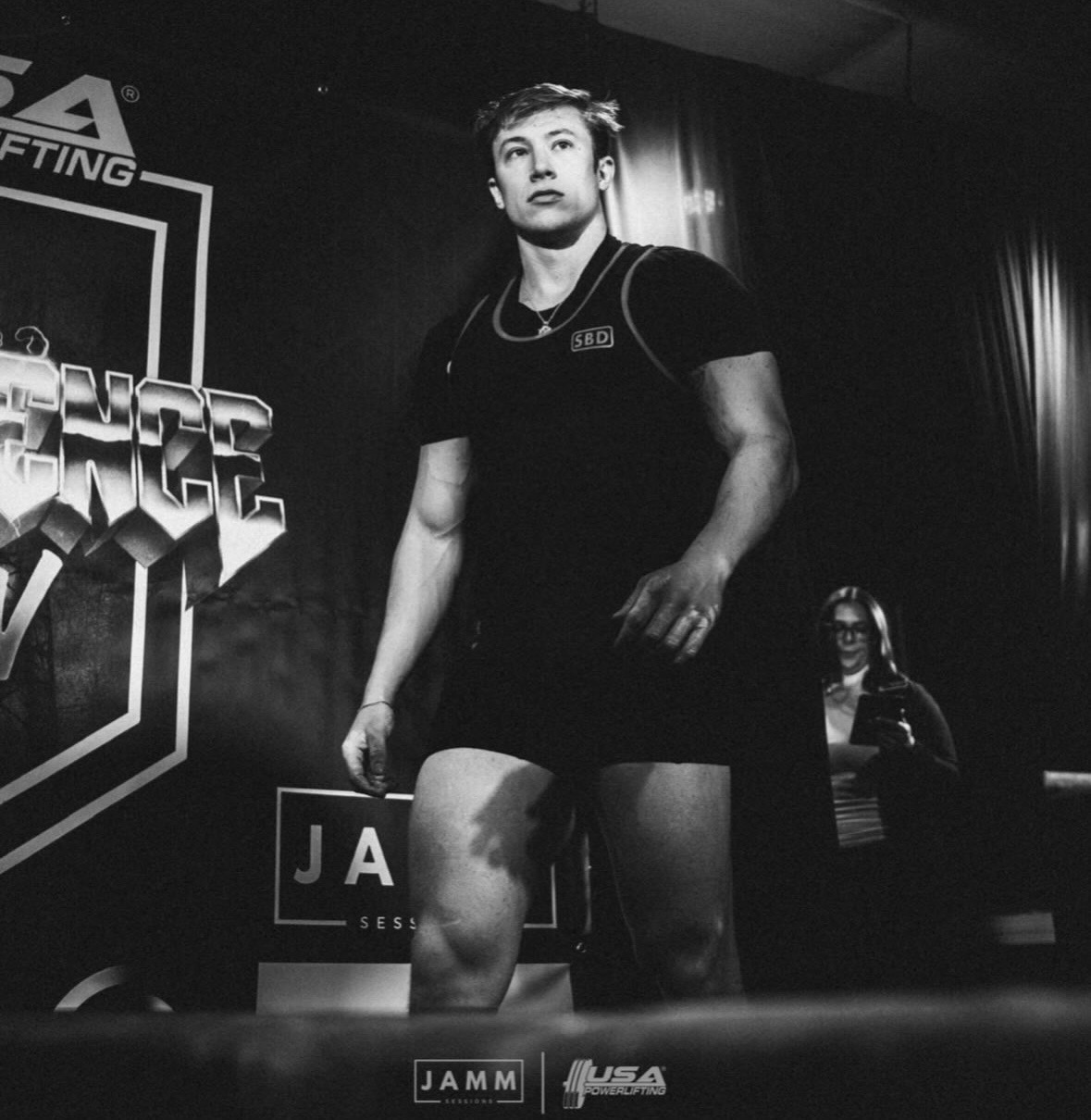
Brian Ruhl
Master of Public Health in epidemiology and health analytics, B.S. in public health. Certified personal trainer: Exos Performance Specialist and National Council for Certified Personal Trainers (NCCPT).
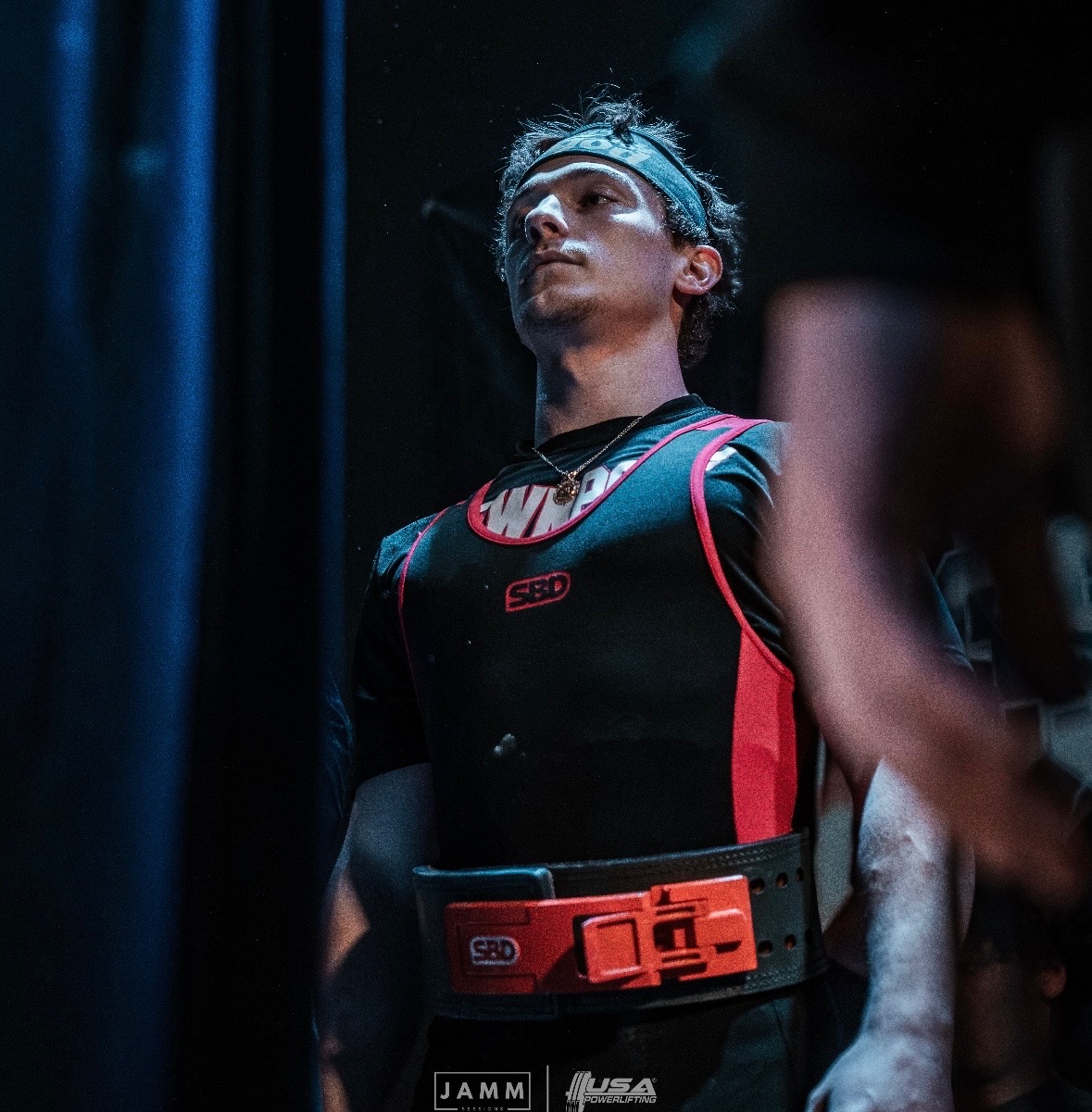
Anthony Ruhl
B.S. in public health with a minor in history, Citi Program Public Health Research certified. He's the research engine of the operation — actively reviewing cutting-edge health science and longevity research. He's also deeply fascinated about what came before us, studying natural history, geographic history, and human history for over a decade.
Find out what your first session looks like.
Take the quiz →References
- 1. Alegría-Torres JA, Baccarelli A, Bollati V. Epigenetics and lifestyle. Epigenomics. 2011;3(3):267–277. PMID: 22122337. PubMed
- 2. Bekdash RA. Epigenetics, Nutrition, and the Brain: Improving Mental Health through Diet. Int J Mol Sci. 2024;25(7):4036. PMID: 38612845. PubMed
- 3. Fitz-James MH, Cavalli G. Molecular mechanisms of transgenerational epigenetic inheritance. Nat Rev Genet. 2022;23(6):325–341. PMID: 34983971. PubMed